
This page accompanies a conversation between Aspiriant Chief Client Officer and Partner Sandi Bragar and Thomasina Williams, Founder of Sankofa Legacy Advisors.
The conversation is about family systems — a way of understanding how families operate.
Family systems shape how we think about money, communicate with each other, and navigate relationships across generations.

When tensions rise in relationships, families default to four patterns to relieve the discomfort — generally without realizing it. The relief is temporary, and does not address the underlying source of the tensions, which remain in place.
These patterns are passed down from generation to generation and jeopardize a family's ability to stay connected and manage life's inevitable challenges.
When one person chooses to interrupt the patterns and engage differently, it shifts what becomes possible.
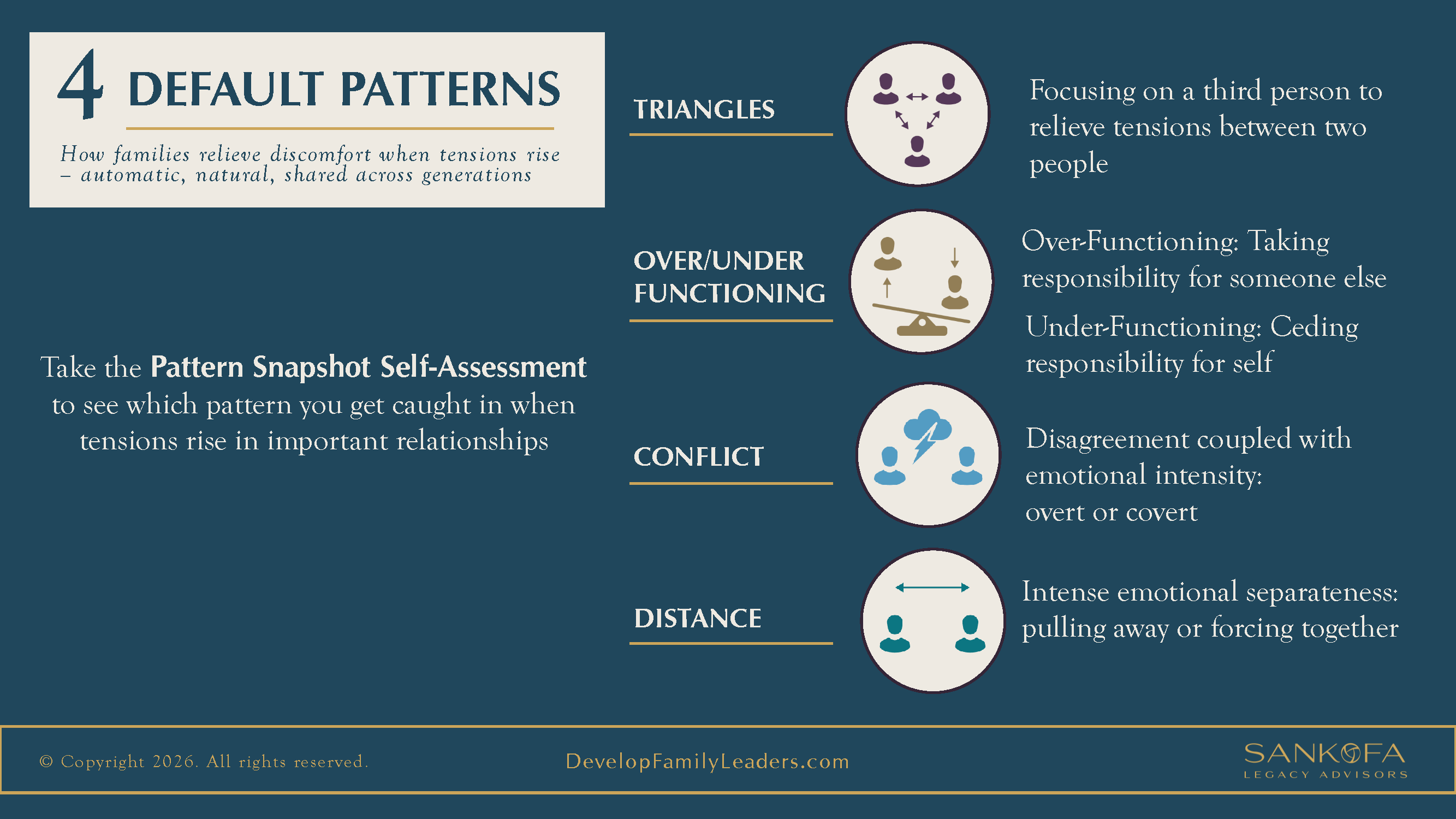
To support you in noticing the patterns of interacting where you get caught most often, take this Pattern Snapshot Self-Assessment.
This is strictly for your personal reflection. There’s nothing to submit to anyone else.
Page 2 explains what your score means.
Page 3 introduces you to "OPRAS," the acronym for a set of practices to increase your awareness of the default patterns, help you interrupt them, stay grounded and stay connected when tensions rise.
.jpg)
To learn more about family systems and the four patterns that families automatically default to as ways of easing the discomfort when tensions rise:
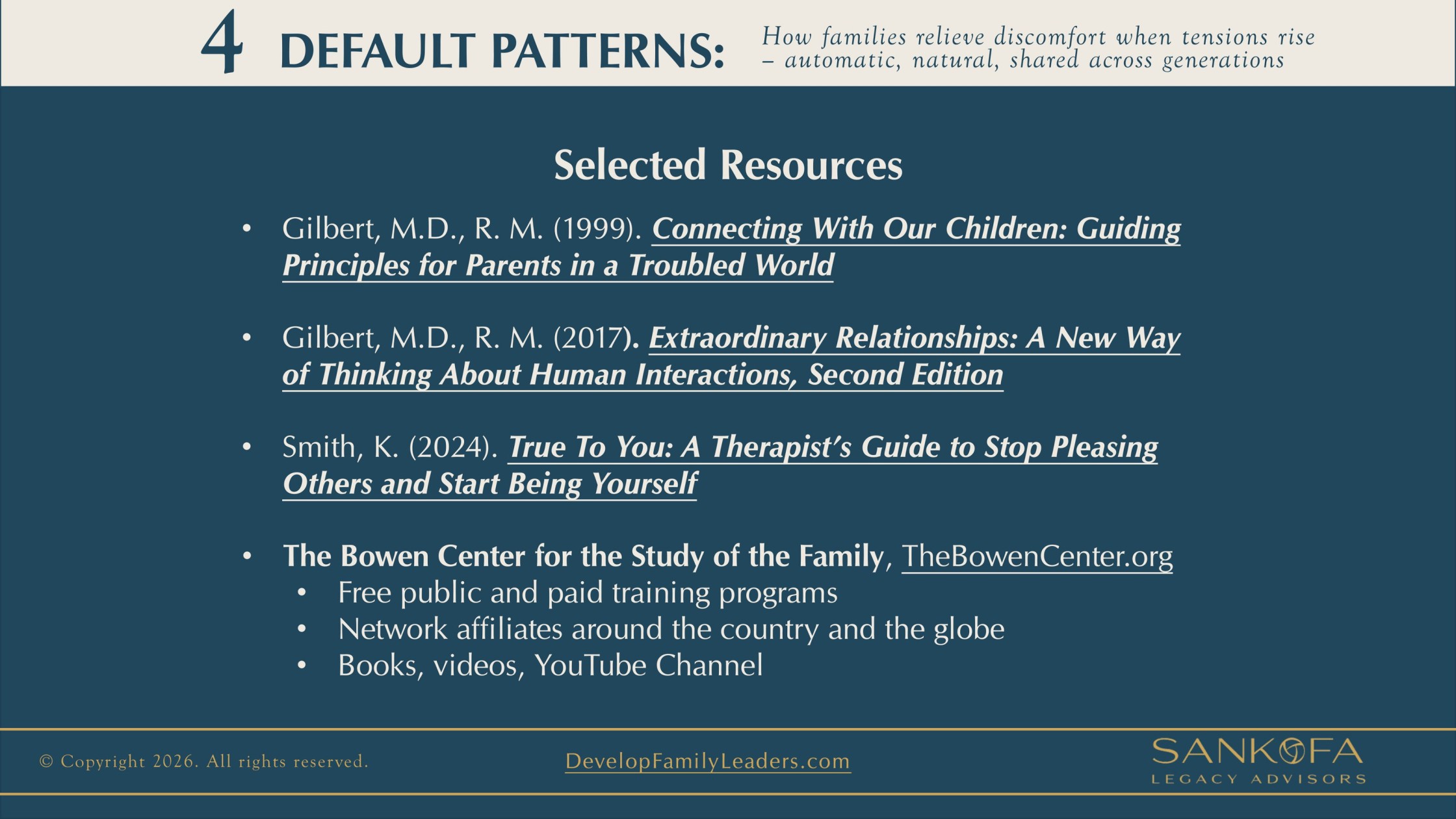
Visit the website of The Bowen Center for the Study of the Family.
For further reading, these three books are good places to start:



We help families develop leaders to sustain both their financial wealth and their individual and collective well-being across generations.


